


Melbourne Apartments · Market Warning · Updated September 2026
Melbourne Apartment Market Warning: Negative Growth, Oversupply & Investor Risks
One in five Melbourne units now resells at a loss. Here’s what’s behind it, and how to avoid buying the wrong apartment.
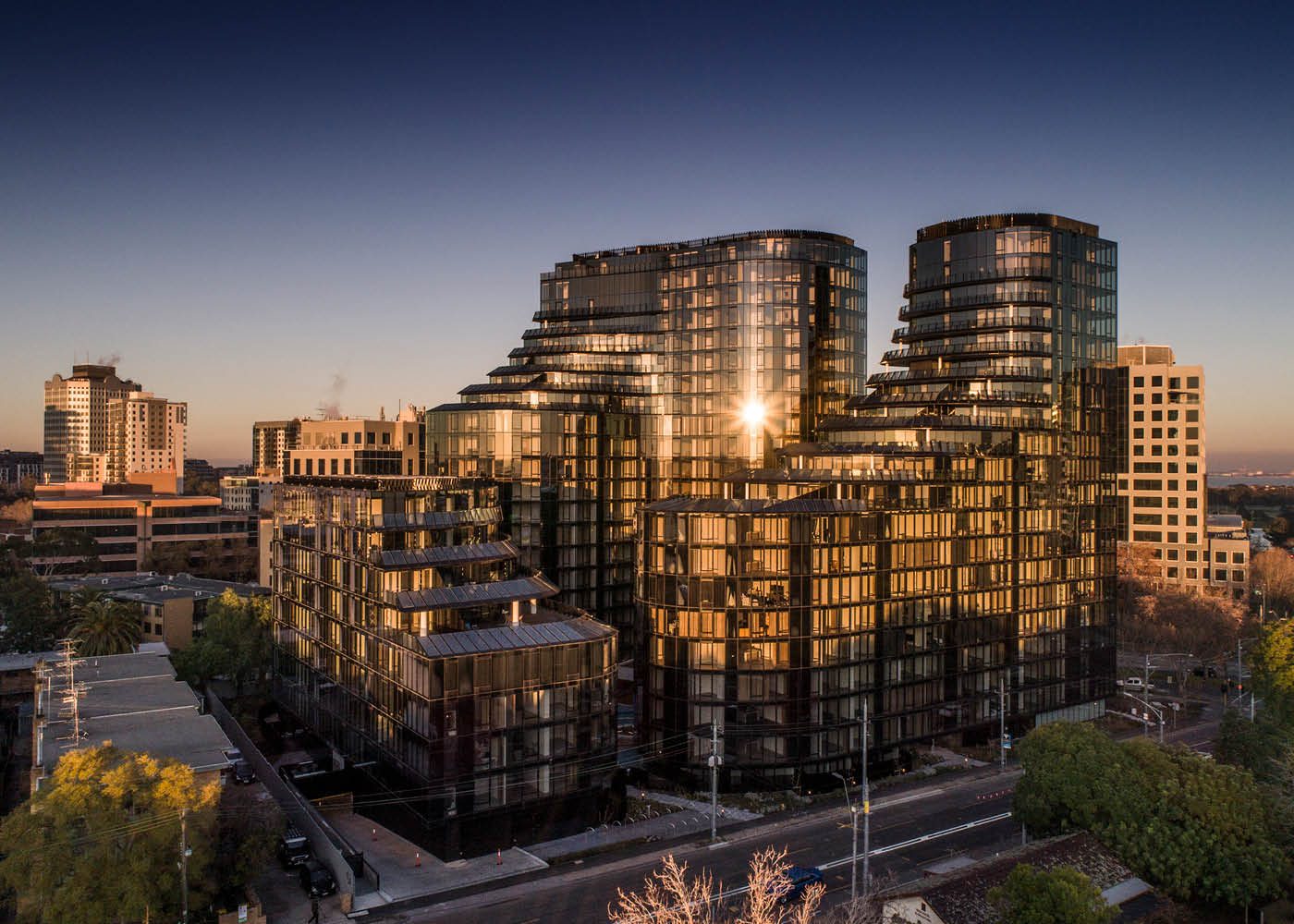
Photo: Melbourne (AU), Southbank by Dietmar Rabich, CC BY-SA 4.0, cropped and converted to black and white.
For many investors, inner-city Melbourne apartments were once seen as a safe, affordable way into the property market. The data now tells a very different story.
A growing number of apartment owners are finding their investment has delivered little or no growth, and in many cases a loss, even before counting holding costs, owners corporation fees, interest and taxes. This isn’t isolated. It’s a structural issue in parts of Melbourne’s investor-focused apartment market.
Sources: Cotality Pain & Gain Report, June quarter 2026; Charter Keck Cramer via The Fifth Estate.
In this article
Prefer apartments but want to buy the right one? Read our Melbourne apartment investment guide, and compare growth corridors with land content on our Melbourne & Victoria locations map.
Melbourne Units vs Houses: The Performance Gap
Cotality’s Pain & Gain Report for the June quarter 2026 shows how far Melbourne units have fallen behind:
| June quarter 2026 | Resales at a loss |
|---|---|
| Melbourne units | 20.8% |
| Melbourne houses | 4.3% |
| All dwellings, national | 4.6% |
| Units, national | 9.5% |
Put simply, a Melbourne unit seller is almost five times more likely to make a loss than a Melbourne house seller. Nationally, the median loss was $45,000, and Sydney and Melbourne units together accounted for 83.3% of the value of all unit resale losses (Your Investment Property).
Cotality research head Gerard Burg noted that Melbourne CBD unit values peaked back in 2017, which makes a profitable resale very hard. He said the risk of a loss is “considerably higher in parts of Sydney and Melbourne”.
And these figures don’t include holding costs
Resale figures compare purchase and sale prices only. They leave out:
- Owners corporation fees and special levies
- Council rates, land tax and insurance
- Maintenance, stamp duty and agent commissions
- Interest paid and the opportunity cost of capital
Once these are included, the real loss can be significantly larger.
8,000 Unsold Apartments Across Melbourne
Richard Temlett of research firm Charter Keck Cramer estimated in 2025 that about 8,000 of the roughly 45,000 apartments built across metropolitan Melbourne in the four years to 2024 were still unsold (The Fifth Estate).
One key reason: new apartments needed about $12,500 to $15,000 per square metre to be viable in 2025, against $8,000 to $10,000 for existing stock. Excess investor-grade stock was concentrated in locations such as the CBD, Box Hill and Footscray. That puts downward pressure on resale values in investor-heavy towers and precincts.
New apartment construction has since slowed sharply because of cost and finance constraints, and some analysts now forecast future shortfalls. Supply has to be judged precinct by precinct, not with a blanket “Melbourne is oversupplied”. Our Melbourne apartment specialist page covers this in detail.
Negative Equity Is a Real Risk
Negative equity happens when your property is worth less than your mortgage. That creates a difficult position:
- You can’t sell without crystallising a loss
- You may still owe the bank after selling
- Refinancing becomes difficult
- Financial flexibility disappears
The Reserve Bank has long noted in its Financial Stability Review that borrowers in negative equity are more at risk if they also hit repayment problems, because they can’t sell to clear the debt.
Low-deposit buyers are most exposed
The federal Home Guarantee Scheme lets eligible first-home buyers purchase with a 5% deposit, with no income caps since October 2025. That’s helped many people into the market. But a buyer with 5% equity in an apartment that loses value can move into negative equity quickly, and may have little choice but to hold.
Three Forces Holding Melbourne Apartments Back
1. Investor-focused supply
Large numbers of high-rise apartments were built with small floorplans and investor-focused designs. They have limited owner-occupier appeal, so resale depends on other investors.
2. Quality and defects
Water leaks, cladding, structural and acoustic issues, and lift failures lead to special levies, rising fees and investor exits. As owners leave, remaining owners carry more of the cost.
3. Holding costs
Owners corporation fees, insurance and Victorian land tax have all risen, and the RBA cash rate is now 4.60%. These costs can wipe out rental returns.
Builder insolvencies add to the risk
Construction has the highest number of company insolvencies of any industry. ASIC recorded 2,975 construction companies entering external administration in 2023–24. For apartment owners, that raises defect rectification, warranty, delayed repair and strata cost risks.
When investors start exiting a building, levies rise, the remaining owners pay more, and more owners sell. That spiral is the risk to avoid.
Where the Melbourne Apartment Market Is Now
To be balanced, 2026 has been a different story from the long run. With the wider Melbourne market falling, units have held up better than houses because of their relative affordability:
| Melbourne, year to August 2026 (Cotality) | Change in values |
|---|---|
| All dwellings | −4.7% |
| Houses | −5.7% |
| Units | −2.5% |
Domain’s June 2026 report put the median unit at about $587,000, against about $1.04 million for a house. That gap is why apartments remain relevant for many buyers.
Both. Apartments can be a sensible way into a well-located market. But the long-run resale record of inner-city investor stock is poor, and it takes careful selection to avoid it. The problem isn’t apartments. It’s the wrong apartments.
The Outlook
Best case
Slower construction absorbs excess stock, rents keep rising and values stabilise.
Most likely
Investor-heavy towers stay flat while well-located, owner-occupier apartments and land-based property perform better.
Worst case
Higher rates force discounted sales in weaker buildings, comparable values fall and negative equity spreads.
What This Means for Property Investors
If you own one
Understand the real risk of selling at a loss. Check owners corporation financials, sinking fund and defect history, and watch vacancy and investor turnover in your building.
If you’re buying one
Look at the long-term resale history. Avoid investor-heavy towers, prioritise owner-occupier appeal and scarcity, and read our off-the-plan guide first.
If you’re investing strategically
Land-based property in supply-constrained, well-serviced locations has historically delivered stronger growth. Start with strategy, then location.
If land and growth are your priorities, our house and land research and location guides for Casey, Wyndham, Melton, Hume and Geelong are a good place to start. If an apartment suits your budget or goals, our apartment specialists can help you find one worth owning.
The right way
- Investor → Strategy → Location → Property
Not
- Cheapest apartment → Hope
The Bottom Line
- 20.8% of Melbourne unit resales made a loss in the June quarter 2026
- Melbourne CBD unit values peaked in 2017
- About 8,000 new apartments were estimated unsold in 2025
- Holding costs and interest rates are rising
- Construction and defect risks remain
Not all apartments are poor investments. But high-rise, investor-focused apartments in inner Melbourne carry higher risk and lower growth potential. Understanding those risks before you buy has never been more important.
Anyone can buy a property. We help identify property worthy of your investment dollars.
Own or considering a Melbourne apartment?
Get an Independent View Before You Commit
Talk to Investment Property Melbourne, powered by properT network, about whether an apartment, townhouse or house best fits your strategy.
Melbourne Apartments for Investors & Owner-Occupiers and Buying Off-the-Plan in Melbourne
How we select apartments worth owning.
Is Now a Good Time to Invest in Property? and Australian Property Market Update
The 2026 market backdrop.
Budget 2026–27 Negative Gearing Explained and Negative Gearing Changes and Cash Flow
How the tax changes affect holding costs.
Why Invest in Armstrong Creek and Why Wyndham City Matters
Land-based growth corridors we research.
The Rise of Dual Key Properties, Granny Flats and Modular Homes, Sell or Use My Backyard and Why I Wouldn’t Invest in Co-Living
Other strategies across the network.
Research & Sources
Resale and values
Supply, finance and construction
General information only. Investment Property Melbourne and properT network do not provide personal financial, legal, tax or lending advice. Figures are from the sources and periods stated and may change. Property investment carries risk, including the risk of loss. Seek independent professional advice before making any decision.
One Network. Nationwide Reach.
Pingback: Wyndham City One of Melbourne’s Most Watched Investment Markets | Investment Property Professionals Australia wide
Pingback: SMSF Investment Property | SMSF Investment Property | One Contract Property |NDIS Property | SIL Homes | Co-Living Property
Pingback: High-Yield vs Capital Growth Property in SMSFs | Strategic SMSF Property Investment
Pingback: SMSF and Investment Property
Pingback: SMSF Investment Property | SMSF Investment Property
Pingback: Why Negative Gearing Still Favours New Build Investment Properties
Pingback: Co-Living Property Demand growth
Pingback: Sunshine Coast Property Investment Market 2026 | Growth & Market Outlook
Pingback: The Queensland Olympic Effect: A Once-in-a-Generation Property Investment Opportunity | Queensland Investment Property | properT network